
Moisture-Sensitive Formulations: Why Shelf-Life Validation Should Start With the Package
Questions This Blog Will Answer
- Why are powders, vegan capsules and other nutraceutical formulations particularly sensitive to moisture?
- How can moisture exposure affect product quality and performance over time?
- Why is a standard desiccant approach not appropriate for every formulation?
- How can simulation and testing support shelf-life validation before commercialization?
- What should nutraceutical teams evaluate when formulation or packaging changes?
Moisture Sensitivity Is a System Challenge
Nutraceutical formulations continue to evolve. Powders, probiotics, botanical blends, gummies and vegan capsules can give brands new ways to meet consumer preferences, but they can also introduce different stability challenges. Moisture is especially important because even modest changes inside a package may affect flowability, texture, ingredient stability, capsule performance or overall product quality.
A moisture-sensitive formulation cannot be protected by looking at the formulation alone. The product, package, headspace, environmental exposure and active packaging all interact over time. A package that performed well for one formula may not provide the same result after an ingredient, dosage form, bottle size, closure or distribution condition changes.
Why Powders and Vegan Capsules Deserve a Closer Look
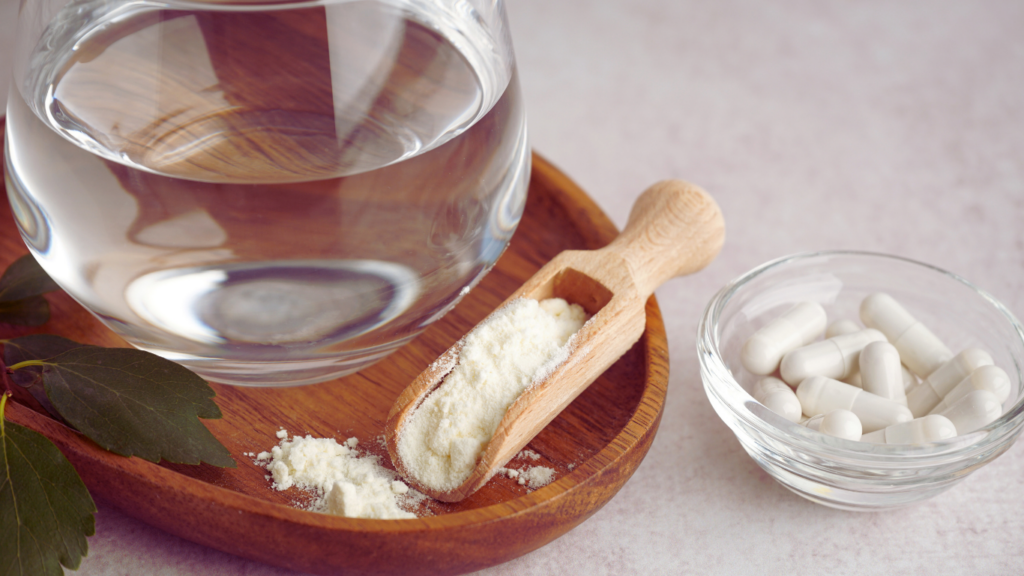
Powders often have large exposed surface areas and may contain ingredients that respond readily to humidity. Depending on the formulation, moisture can contribute to clumping, reduced flowability or other physical changes that affect the consumer experience and manufacturing performance.
Capsules introduce another consideration. Different shell materials and formulations can respond differently to their environment. A vegan capsule, for example, should not automatically be treated as equivalent to a previous capsule format simply because the active ingredients are similar. The appropriate internal package environment needs to be evaluated for the complete product system.
The same principle applies when a brand adds hygroscopic ingredients, changes excipients or reformulates to meet clean-label or dietary preferences. Each change can alter the moisture profile that packaging teams need to manage.
Move Beyond a One-Size-Fits-All Desiccant Decision
It is tempting to begin with a familiar desiccant size or use the same solution that worked for a previous SKU. That may be convenient, but it does not answer the most important question: what moisture environment does this specific product require throughout its intended shelf life?
Desiccant performance depends on more than the amount of material inside a packet or canister. Package barrier, initial moisture, product characteristics, headspace, storage conditions and the desired equilibrium environment can all influence the requirement. In some applications, controlling relative humidity within a particular range may be more appropriate than simply maximizing moisture uptake.
A science-based approach starts by defining the stability challenge and then selecting the technology around that requirement.
Use Simulation to Inform Shelf-Life Validation
Multisorb uses packaging science and simulation to evaluate how a product, package and environment may interact over time. The process can include review of packaging materials, environmental conditions, degradation profile and desired shelf life, followed by modeling of moisture or oxygen behavior and identification of an appropriate sorbent technology, capacity and format.
Simulation can help development teams narrow options before committing to extensive physical testing. Laboratory work and validation can then be used alongside the model to confirm performance and support the final packaging decision.
This matters when launch schedules are tight. Waiting until late-stage stability work to discover that a package is not maintaining the required environment can create delays, additional testing and packaging changes. Earlier evaluation gives R&D and packaging teams more room to make informed adjustments.
Revalidate When the System Changes
Shelf-life confidence should not be treated as permanent if important variables change. A new formulation, capsule material, package size, barrier structure, closure, fill quantity or distribution environment can alter the conditions inside the package. Even when the external package looks nearly identical, the protection requirement may be different.
For nutraceutical teams, the goal is not to add more packaging than necessary. It is to understand the sensitivity of the formulation and engineer the right level of protection. That means connecting formulation science with packaging science early enough to influence the decision.
Cross-functional alignment is equally important. Formulators may focus on ingredient performance, packaging engineers on barrier and format, quality teams on stability requirements, and operations on manufacturability. Bringing those perspectives together early can prevent a technically sound formulation from reaching late development with a package that is difficult to validate or scale. It also helps ensure that shelf-life targets, package choices and production requirements are being evaluated against the same assumptions.
Documenting the assumptions behind the selected configuration also gives teams a useful reference when future SKUs, package sizes or sourcing changes are considered. That technical history can make subsequent development work more focused and easier to compare.
Moisture-sensitive products require more than a component selection. They require a validated system. By modeling the environment, testing the approach and selecting active packaging around the actual formulation, manufacturers can move toward commercialization with greater confidence that product quality will be protected from production through the intended shelf life.
Connect with Multisorb’s Team of Experts to Learn More
Our in-house experts are here to help.
Ready to Protect Your Moisture-Sensitive Formulation
Protect quality from production through the intended shelf life.