A single non-compliant packet can trigger a costly recall. Understanding the regulatory rules on desiccants keeps products and reputations safe. Here’s the clarity every packaging engineer needs.
Are Desiccants Food-Safe?
Yes—when they’re made from materials the U.S. Food & Drug Administration has approved for food contact. Under 21 CFR Parts 170–199, the agency recognizes two exposure categories:
- Direct Food Contact: packets placed inside pouches where they might touch the product.
- Indirect Food Contact: packets enclosed in bottle lids, outer cartons, or compartments that prevent direct contact.
For direct contact, the desiccant’s inner contents and its outer wrapper (Tyvek®, paper, or film) must be food-safe moisture absorbers. Indirect applications allow more leeway, yet most brands stick to fully compliant materials to simplify global distribution.
Which Desiccant Materials Meet Industry Requirements?
Let’s analyze which materials make up industry compliant desiccants:
Silica Gel (21 CFR § 182.90)
Amorphous silica gel is listed as Generally Recognized as Safe (GRAS) for use as industry compliant desiccant. It’s inert, non-toxic, and the go-to choice for snacks, spice blends, and vitamin bottles.
Synthetic Zeolites / Molecular Sieves (21 CFR § 177.1520)
These engineered crystals boast ultra-low residual dust and high adsorption at elevated temperatures, making them popular in jerky, coffee, and nutraceutical packaging.
Clay and Calcium Oxide Blends (GRAS)
Natural montmorillonite clay and food-grade calcium oxide appear in several GRAS notices. They work well in cooler, drier supply chains but break down at high humidity, so verify performance in real routes.
Activated Carbon (Dual-Function Packets)
Carbon alone isn’t a desiccant, but blended packets can remove both odors and moisture. The carbon must be food-grade and listed for intended use; suppliers should provide a food-contact letter confirming compliance.
Always request a written food-contact statement from your supplier that cites the exact CFR sections or GRAS notices for each component.
Labeling and Handling Requirements
Let’s break down some common labeling and handling requirements for industry compliant desiccants:
Mandatory Packet Warnings
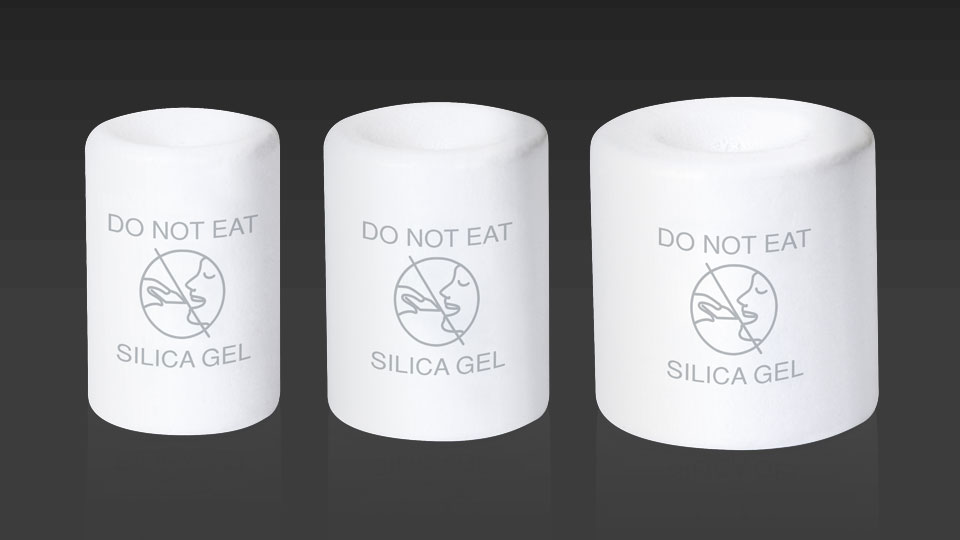
Industry guidance recommends a clear, visible “Do Not Eat” statement or symbol. For products distributed globally or across multiple regions, labeling may incorporate multiple languages and/or internationally recognized.
Lot Coding and Traceability
Each master carton of packets should list a lot or batch number. Record that number in your production paperwork so any future investigation can pinpoint the exact packet source.
Proper Storage
Packets can pre-saturate in humid rooms, undermining performance and complicating shelf-life validation. Store rolls or boxes in sealed containers below 50 % RH and rotate stock using FIFO rules.
Compliance Steps for Food Packaging Safety Teams
- Collect Food-Contact Statements: Ask suppliers for a letter referencing the relevant 21 CFR citation or GRAS notice. Keep those letters in your quality-management system.
- Verify Packet Construction: Confirm that the wrapper—Tyvek®, paper, or film—also meets industry food-contact requirements. Ink on printed warnings must be food-grade, too.
- Add Packets to HACCP or HARPC Plans: Identify desiccants as a preventive control step. Outline where packets are stored, handled, and inserted, plus any critical limits (e.g., indicator bead must be “blue” at point of use).
- Document Usage in Batch Records: Note packet lot number, size, and quantity for every SKU. During an regulatory inspection, auditors will expect to see this traceability.
Common Pitfalls—and How to Avoid Them
1: Using Industrial-Grade Silica Instead of Food-Grade
Industrial silica gel often contains residual acids, heavy metals, or anti-caking agents that aren’t cleared for food contact. In a best-case scenario, that choice complicates regulatory audits; in a worst case, it leads to a costly recall. Solution: write “food-grade, 21 CFR-compliant silica gel” into every purchase order and verify the supplier’s food-contact letter before the first shipment leaves their dock.
2: Omitting the Required “Do Not Eat” Warning
Brands will sometimes want a cleaner look and will ask to have the “Do Not Eat” warning removed. Industry guidance states that the consumer must be warned not to ingest it. Solution: keep the “Do Not Eat” warning in a legible font—even on clear or unprinted packets—and verify that any multi-language artwork still includes the statement in English.
3: Overlooking Heat-Process Tolerance
Packets added before hot-fill, pasteurization, or retort must survive elevated temperatures without leaking or shedding dust. A wrapper that softens at 120 °C can fail in a retort cycle and contaminate the product. Solution: confirm the wrapper’s melt point and the desiccant’s thermal stability with your supplier, and run a test batch through the highest-temperature process in your facility.
By addressing these pitfalls upfront—specifying food-grade materials, preserving required warnings, verifying dye approvals, and confirming heat tolerance—you safeguard both regulatory compliance and consumer trust.
Quick Audit Checklist for Regulatory Readiness
- Material Verified: Every component cited in 21 CFR or GRAS?
- Supplier Statement on File: Food-contact letter dated and signed?
- Packet Markings: “Do Not Eat” present; indicator dye approved?
- Traceability: Lot numbers recorded in batch documents?
- Storage Controls: Packets kept ≤ 50 % RH; FIFO rotation logged?
- Process Inclusion: HACCP / HARPC plan lists desiccant step and limits?
Checking these six boxes keeps inspections short and stress-free.
Key Takeaways
Industry compliant desiccants are plentiful, but documentation is the difference between smooth audits and costly recalls. Verify your materials, label packets correctly, store them in low humidity, and record every lot. With those basics in place, you can protect product quality and deliver shelf-life confidence to retailers and consumers alike.
Navigating industry requirements doesn’t have to be daunting. Reach out to our team for compliant packet options, documentation packs, and implementation advice that keep your products safe, audit-ready, and on shelves longer.