
Scale Shelf Life Without Compromise
Learn how active packaging helps food manufacturers maintain freshness, consistency, and shelf-life stability as production and distribution expand.
Questions This Blog Will Answer
- Why does shelf life become harder at scale?
- How do oxygen and moisture affect food quality?
- What role does active packaging play?
- How can packaging support clean label initiatives?
- Why is packaging consistency critical?
Growth creates new challenges for food manufacturers. As companies expand into new retailers, larger production volumes, and broader distribution networks, shelf-life management becomes increasingly difficult. Products that once traveled locally may now spend additional time in warehouses, transportation networks, and retail shelves before reaching consumers.
Oxygen and moisture exposure remain two of the largest contributors to food degradation. Oxygen can accelerate oxidation, flavor deterioration, nutrient loss, and mold growth. Moisture fluctuations can cause texture changes, clumping, microbial growth, and loss of crispness. These environmental factors become harder to control as supply chains grow more complex.
For clean label manufacturers, the challenge becomes even greater. Products formulated with fewer preservatives are often more sensitive to environmental exposure. Packaging must now take on a more active role in protecting freshness and supporting shelf stability.
This is where active packaging becomes critical.
Traditional packaging primarily acts as a passive barrier between the product and external conditions. Active packaging technologies go further by interacting directly with the internal package environment to help maintain product quality throughout storage and distribution.
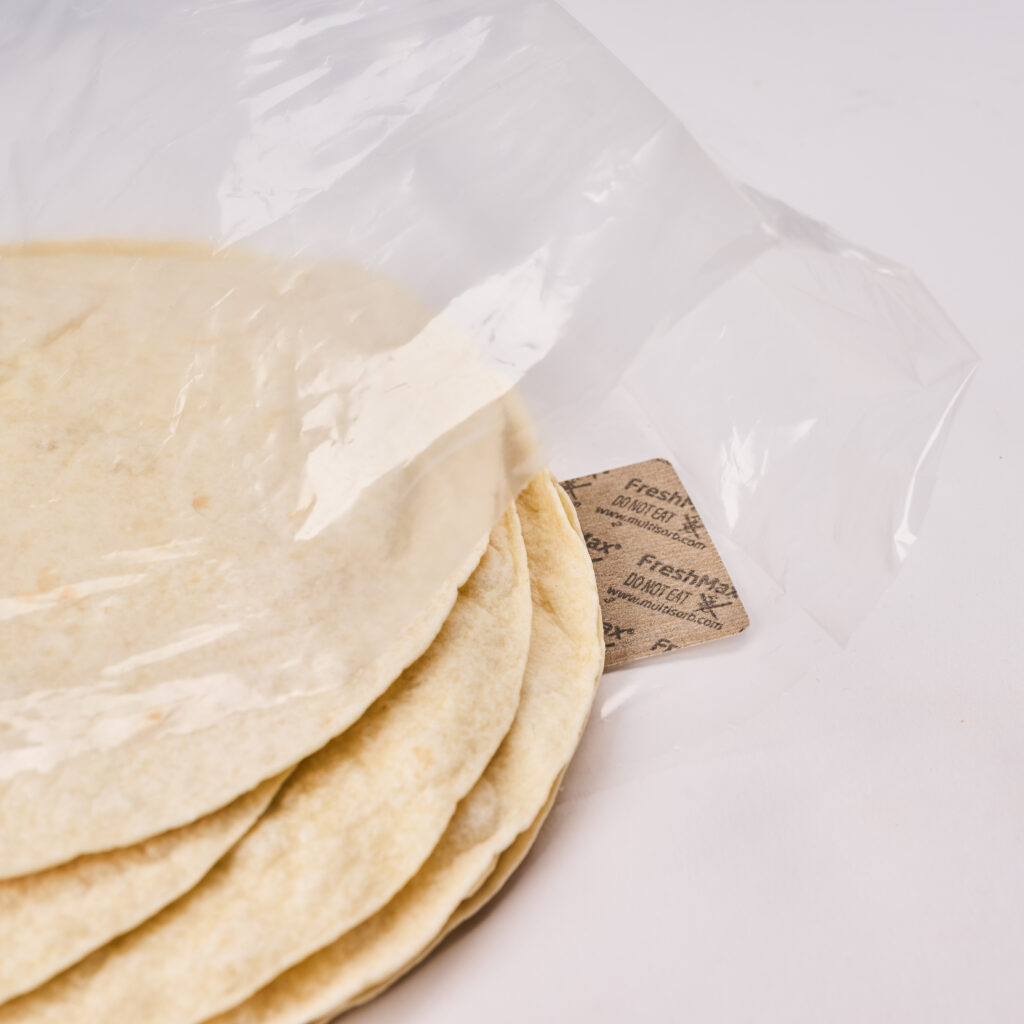
Oxygen absorbers remove residual oxygen trapped inside packaging. By reducing oxygen levels, manufacturers can slow oxidation, mold growth, and flavor degradation. Oxygen absorbers are widely used in baked goods, snack foods, nuts, jerky, tortillas, and nutritional products.
Desiccants help regulate humidity levels within the package. By controlling moisture, manufacturers can maintain crispness, texture consistency, powder flowability, and microbial stability. Desiccants are especially important for freeze-dried foods, powders, snacks, and protein products.
As manufacturers scale distribution, packaging systems that once worked regionally may no longer provide enough protection. Products encounter fluctuating temperatures, longer transit times, changing humidity, and increased handling throughout the supply chain.
Shelf-life failures create operational and financial risks beyond spoiled inventory. Inconsistent product quality can damage retailer relationships, reduce consumer trust, increase product returns, and limit geographic expansion opportunities.
Packaging consistency becomes increasingly important as production volumes grow. Small inconsistencies in package performance can quickly become expensive operational problems.
This is why many food manufacturers are now evaluating packaging systems during product development itself. Manufacturers increasingly assess oxygen transmission rates, moisture vapor transmission rates, water activity, seal integrity, and distribution conditions to better understand shelf-life performance.
Packaging is no longer separate from formulation strategy. It is a core part of product protection.
Advanced packaging systems also help support broader distribution opportunities. Products with stronger shelf-life protection may reduce dependence on refrigerated logistics, lowering transportation costs and improving retail flexibility.
Automation further improves consistency. Automated dispensing equipment for oxygen absorbers and desiccants help improve placement accuracy, throughput efficiency, quality control, and operational reliability.
Sustainability goals also reinforce the importance of packaging innovation. Reducing food waste remains one of the industry’s largest priorities. Packaging systems that help maintain freshness longer can reduce spoilage, improve inventory flexibility, and support operational efficiency.
The future of food manufacturing will increasingly depend on integrated packaging strategies that combine active packaging, automation, operational consistency, and environmental control.
Manufacturers that invest in engineered packaging systems today will be better positioned to scale production, maintain quality, reduce waste, and protect brand reputation as supply chains continue expanding.
Growth introduces complexity. The right packaging strategy helps manufacturers scale with confidence.
Ready to Scale Shelf Life Without Compromise?
Packaging must now take on a more active role in protecting freshness and supporting shelf stability.