The True Cost of Dispensing Equipment: Looking Beyond CapEx to Total Cost of Ownership
What You’ll Learn
- Why the purchase price of dispensing equipment is only one part of the true cost of the investment.
- Which operational factors, including downtime, labor, maintenance, line speed, and sorbent dispensing performance, should be included in a total cost of ownership analysis.
- How aging dispensing equipment can create costs that may be difficult to see in a traditional capital expenditure budget.
- Why equipment configuration and integration should be evaluated alongside equipment cost.
- How manufacturers across pharmaceutical, nutraceutical, food, healthcare, and other industries can build a more complete business case for replacing or upgrading dispensing equipment.
When manufacturers develop capital equipment budgets, the conversation often begins with a straightforward question:
How much will the equipment cost?
It is an important question, but it is rarely the only one that determines whether an equipment investment makes financial sense.
For automated dispensing equipment, the more useful question may be:
What does it cost us to keep operating the equipment we have today?
An older dispenser may have no remaining capital cost on the balance sheet, but that does not make it free to operate. Unplanned downtime, maintenance, replacement parts, operator intervention, reduced throughput, changeovers, and inefficient production can create ongoing expenses that may exceed the cost organizations associate with keeping existing equipment in place.
Understanding those costs requires looking beyond capital expenditure, or CapEx, and evaluating the total cost of ownership, or TCO, of the dispensing operation.
CapEx Is the Beginning of the Calculation
CapEx represents the investment required to purchase and implement new equipment. Depending on the project, this can include the equipment itself as well as installation, integration, validation, training, and other implementation expenses.
Because these costs are visible and relatively easy to quantify, they naturally receive significant attention during budgeting.
TCO expands the analysis.
Instead of asking only what new equipment costs, TCO examines the expenses associated with operating dispensing equipment over time. That distinction becomes particularly important when comparing a new system against aging equipment that has already been depreciated.
The existing equipment may appear less expensive because there is no new purchase order. Operationally, however, it may tell a different story.
What Is Your Current Dispensing Equipment Really Costing?
A meaningful TCO evaluation should begin with the production environment, not the equipment price.
Consider how the dispenser operates across an actual production year.
How many hours per shift does the line operate? How many shifts per day and production days per year? What is the required line speed? How frequently does the dispenser stop? How much production is lost when it does?
Then consider the costs surrounding those events.
Unplanned downtime may require operators and maintenance personnel to troubleshoot the equipment while production is stopped. A dispenser that requires frequent attention may also reduce overall equipment effectiveness by creating recurring short stops that individually appear minor but become significant when accumulated across hundreds or thousands of operating hours.
A TCO analysis can include factors such as:
- Annual operating hours and number of shifts
- Required production rate and units produced per minute
- Planned and unplanned equipment downtime
- Labor associated with operation, adjustment, and maintenance
- Preventive and corrective maintenance requirements
- Replacement parts and service costs
- Frequency and duration of product or sorbent changeovers
- Sorbent dispensing rate and consistency
- Lost production associated with dispenser-related interruptions
- Remaining useful life and availability of support for existing equipment
Looking at these variables together creates a much more realistic comparison between maintaining the current state and investing in a new one.
Aging Equipment Can Create an Invisible Operating Expense
Aging equipment deserves particular attention during capital planning.
The question should not simply be whether the equipment still runs. The better question is whether it continues to meet the operational, maintenance, throughput, and reliability requirements of the facility.
Maintenance frequency can increase as components age. Replacement parts may become more difficult to source. Controls can become obsolete. Employees with specialized knowledge of older equipment may retire or move into different roles.
At the same time, production requirements may have changed significantly since the dispenser was originally installed.
A pharmaceutical or healthcare manufacturer may be operating at different throughput or validation requirements. A nutraceutical manufacturer may be managing more SKUs and shorter production runs. Food manufacturers may be evaluating greater automation to improve line efficiency and reduce manual intervention.
In each case, equipment that was appropriate when installed may no longer represent the most efficient solution for today’s operation.
Evaluate the Application, Not Just the Machine
Dispensing equipment also should not be evaluated as a standalone component.
The dispenser must work within the production line.
That means considering line speed, available floor space, sorbent format, package configuration, controls, upstream and downstream equipment, operator access, and other facility-specific requirements.
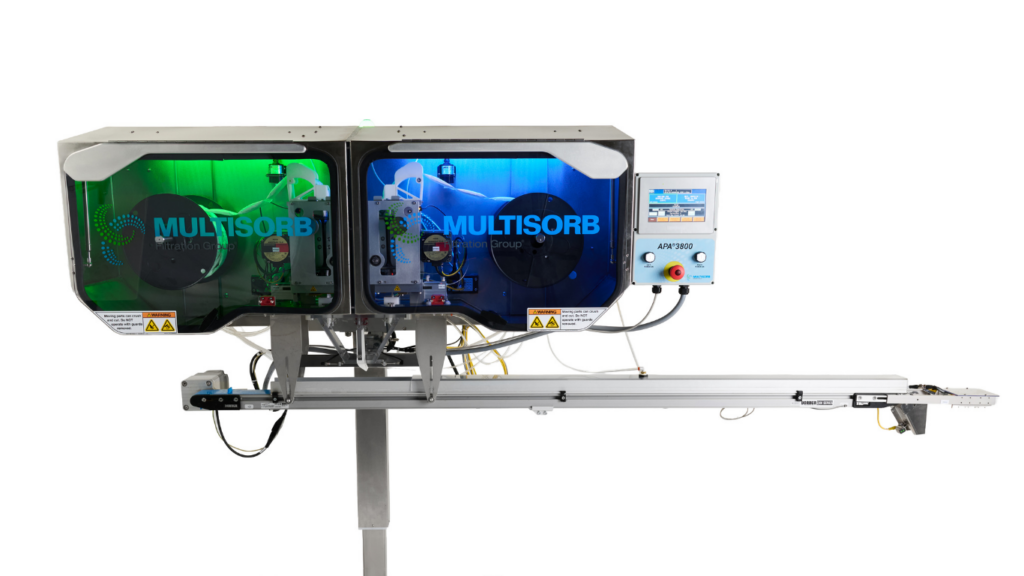
Multisorb’s Active-Pak Automation® (APA®) equipment is designed around this application-focused approach. Rather than requiring every production environment to conform to a standard machine configuration, Multisorb’s equipment and technical teams can evaluate the line requirements and identify customization opportunities that support integration into the manufacturer’s operation.
The objective is a drop-in dispensing solution designed around the application, helping manufacturers address both active packaging requirements and production realities.
That can be particularly important when replacing existing equipment, where footprint, line layout, interfaces, and established operating procedures may constrain what can realistically be installed.
Put Downtime Into Dollars
Downtime is one of the most important variables in equipment TCO, yet it can also be one of the easiest to underestimate.
A few minutes of downtime does not sound significant until it is multiplied by the number of occurrences, shifts, production days, operators, and units that could have been produced during that period.
The same principle applies to line speed.
A difference in dispensing capability can translate into a substantial difference in annual production capacity when evaluated across the full operating schedule.
This is why equipment evaluations should use the manufacturer’s actual operating assumptions whenever possible.
Multisorb’s APA Total Cost of Ownership Calculator allows manufacturers to begin modeling these variables, including operating hours, shifts, downtime, production rates, and sorbent dispensing requirements.
The purpose is not simply to calculate the cost of new equipment. It is to create a clearer financial picture of the current dispensing operation and the potential impact of changing it.
Build a Better Capital Equipment Business Case
A strong capital request should give finance and operations teams more than a purchase price.
It should demonstrate what the organization is spending today, where operational losses are occurring, what risks exist if current equipment remains in service, and what changes can reasonably be expected from an equipment upgrade.
That analysis may ultimately show that existing equipment should remain in place. It may identify an opportunity to upgrade a current Multisorb APA® model. Or it may demonstrate that replacing aging equipment offers a stronger long-term financial and operational outcome.
The important part is having the information to make that decision.
Multisorb’s equipment and technical experts can work with manufacturers to examine those assumptions in greater detail, including application requirements, operating conditions, equipment configuration, service considerations, and potential costs.
Start by understanding what your dispensing operation costs today.
Use the APA Total Cost of Ownership Calculator to evaluate your current operation, identify potential hidden costs, and build a more informed equipment investment analysis.
Understand the True Cost of Your Dispensing Equipment
Use Multisorb’s APA® Total Cost of Ownership Calculator to evaluate downtime, operating costs, production requirements, and potential savings.