
Protect Every Dose: How Smarter Packaging Protects Pharmaceutical Stability
What You’ll Learn
- Why moisture control is essential to pharmaceutical quality.
- How sorbent solutions support stability and compliance.
- Why package testing leads to better packaging decisions.
- How automation improves packaging consistency.
Questions This Blog Answers
- Why is moisture one of the biggest risks to pharmaceutical products?
- How can packaging improve product stability?
- Why is package testing important before commercialization?
- How can automation improve packaging performance?
For pharmaceutical manufacturers, product stability is non-negotiable. Every package must protect the product from the day it leaves the production line until it reaches the patient. While formulations receive significant attention during development, packaging is equally important because the environment inside the package directly influences long-term stability.
Moisture is one of the most common causes of product degradation. Even small amounts can impact potency, reduce shelf life, and increase the risk of quality issues. As manufacturers work toward sustainability goals and packaging optimization, they need solutions that provide reliable protection without adding unnecessary complexity.
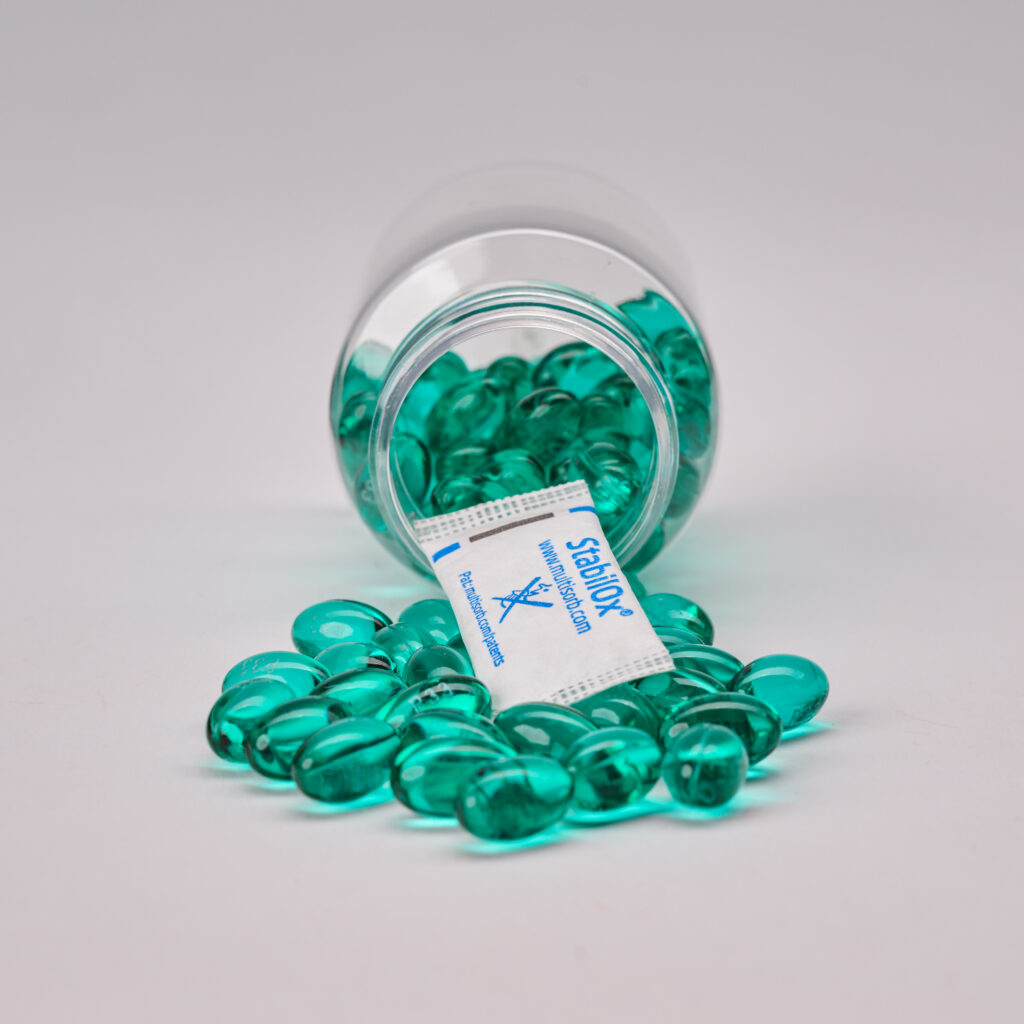
Today’s packaging strategies are moving beyond individual components and toward complete package systems. Sorbent technologies such as StabilOx® H20 and CSF help maintain a controlled package environment, protecting moisture-sensitive products while supporting flexible package designs and evolving sustainability initiatives.
The right solution depends on several variables, including formulation, package size, barrier properties, distribution conditions, and desired shelf life. Rather than relying on assumptions, manufacturers benefit from testing that evaluates the complete package environment. This approach helps identify the most effective solution while avoiding over- or under-engineering the package.
Protection is only part of the equation. Packaging operations also need to be efficient and repeatable. Automated dispensing systems such as the APA 2000 improve dispensing consistency, reduce manual handling, and help manufacturers increase throughput while maintaining quality standards.
As regulatory expectations and customer demands continue to evolve, manufacturers that evaluate their packaging strategy early are better positioned to reduce risk, protect product quality, and improve operational performance. Partnering with a packaging expert during development creates opportunities to optimize both protection and production.
Ready for Smarter Packaging Protection?
Whether you’re launching a new product, evaluating a package redesign, or looking to improve packaging efficiency, Multisorb’s technical experts can help identify the right combination of sorbent technology and package design through testing, consultation, and application expertise.